
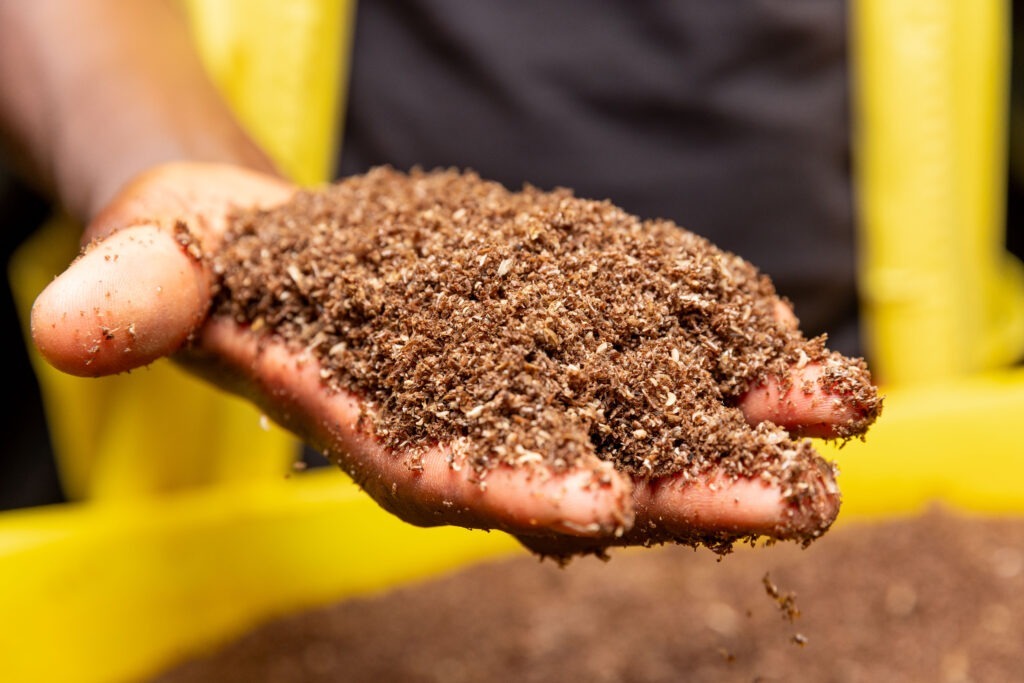
What is Organic Compost from BSF?
At Moterra Farms in Matopo, we’re pioneering sustainable agriculture through innovative practices that honor the land while feeding our community. One of our most exciting developments is Black Soldier Fly (BSF) composting—a revolutionary approach transforming organic waste into premium soil amendment. This technology aligns perfectly with our commitment to regenerative farming and environmental stewardship in Zimbabwe’s beautiful Matabeleland South region.
Understanding Black Soldier Fly Composting
Black Soldier Flies are nature’s most efficient waste processors. These remarkable insects, native to our region, offer sustainable solutions to two critical challenges: organic waste management and soil fertility. Unlike common houseflies, Black Soldier Flies don’t spread disease, enter homes, or become nuisances. They exist peacefully in our ecosystem, performing essential ecological services.
The magic happens through their larvae. These tiny workers consume organic waste voraciously—kitchen scraps, agricultural residues, animal manure—reducing waste volume by 50-80% within days. Through their digestive process, larvae transform waste into two valuable products: nutrient-rich frass (the technical term for insect compost) and protein-packed larvae themselves.
At Moterra Farms, we view BSF composting as perfect harmony between waste reduction and soil regeneration. Matopo’s warm climate provides ideal conditions for year-round BSF production. Our system processes farm waste that would otherwise accumulate, converting it into exceptional organic fertilizer nourishing our crops.
The BSF Composting Process at Moterra Farms
Our BSF operation follows nature’s blueprint while incorporating practical farming wisdom. We begin by collecting organic waste from our farm operations—vegetable trimmings, fruit waste, crop residues, and livestock manure. This diverse waste stream feeds our BSF larvae colony housed in specially designed bins providing shade and proper moisture.
The larvae consume waste rapidly. Within 2-3 weeks, they’ve transformed bulky organic matter into dark, crumbly compost while growing into plump, protein-rich grubs. The beauty of this system lies in its simplicity—larvae self-harvest when mature, crawling up ramps into collection containers. This natural behavior eliminates labor-intensive separation processes.
What remains after larvae migrate is pure BSF frass—our black gold. This compost carries the distinct earthy smell of healthy soil, nothing like the odors sometimes associated with traditional composting. We dry and screen the frass, removing any remaining debris, before packaging for use across Moterra Farms.
Why BSF Compost Transforms Matopo Soils
Matopo’s red soils, while naturally fertile, benefit enormously from organic matter additions. Years of cultivation can deplete soil carbon and microbial diversity. BSF compost addresses these challenges comprehensively.
The nutrient profile exceeds traditional compost significantly. BSF frass contains 2.5-5% nitrogen, 2-4% phosphorus, and 1-3% potassium—balanced nutrition supporting vigorous plant growth. These nutrients exist in readily available forms because larvae digestion pre-processes organic matter, essentially pre-composting it through their remarkable digestive systems.
Beyond NPK numbers, BSF organic compost carries beneficial microorganisms from larvae gut flora. These microbes colonize soil, enhancing nutrient cycling, suppressing plant diseases, and building soil food web complexity. We’ve observed healthier plants with stronger disease resistance in fields receiving regular BSF compost applications.
The physical benefits matter equally. BSF organic compost improves soil structure, increasing water infiltration during Matopo’s dramatic thunderstorms while enhancing moisture retention through dry periods. Our crops access deeper soil moisture reserves, increasing resilience to climate variability.
From Waste to Wonder: Our Production System
Moterra Farms operates BSF composting at scales appropriate for regenerative agriculture. Our system processes approximately 500 kilograms of organic waste weekly, producing 100-150 kilograms of finished compost plus valuable larvae biomass.
We’ve designed our BSF facility using locally available materials—repurposed containers, shade cloth, and simple wooden structures. Matopo’s abundant sunshine provides passive heating, maintaining optimal temperatures for larvae activity. During cooler winter months, we adjust feeding schedules and may reduce production slightly, working with seasonal rhythms rather than fighting them.
Our feeding protocol emphasizes diversity. Mixed waste streams produce superior compost compared to single-ingredient inputs. Vegetable scraps provide nitrogen and moisture, while drier materials like maize stalks add carbon and structure. Livestock manure contributes beneficial bacteria and additional nutrients. This diversity mirrors natural ecosystem processes where multiple inputs create rich, balanced outcomes.
Water management proves critical in our semi-arid environment. BSF larvae require moisture but not saturation. We’ve learned to judge moisture content through experience—the substrate should feel like a wrung-out sponge. Proper moisture prevents anaerobic conditions that slow larvae activity while avoiding waterlogging that can drown developing insects.
Applying BSF Organic Compost Across Moterra Farms
Our vegetable gardens receive BSF organic compost applications before planting and as side-dressing during the growing season. We typically incorporate 3-5 kilograms per square meter into beds before transplanting tomatoes, peppers, leafy greens, and other crops. Results speak clearly—deeper green foliage, vigorous growth, and abundant yields compared to plots receiving only manure or no amendments.
For our fruit trees and perennial crops, we apply BSF compost in rings around the drip line, scratching it lightly into the soil surface. A single mature mango or avocado tree receives 10-15 kilograms annually, split between applications at the start of rains and mid-season. We’ve observed improved fruit set, larger fruit size, and enhanced tree vigor since implementing this program.
Our grain crops—maize, sorghum, and finger millet—benefit from BSF compost incorporated into planting furrows or applied as starter fertilizer at planting. While we cannot yet apply compost across entire grain fields due to production volumes, targeted applications in home garden maize plots demonstrate the potential. Plants receiving BSF compost establish faster and show stronger early growth.
We’re experimenting with compost tea—steeping BSF frass in water to create liquid fertilizer for foliar feeding. Early results show promise for quick nutrient boosts during critical growth stages. The tea’s beneficial microbes may also provide some disease protection, though we’re still documenting these effects carefully.
Benefits Beyond Our Fields
BSF composting delivers advantages extending beyond soil fertility. Waste reduction matters tremendously. Organic waste that once accumulated, attracting flies and creating odors, now becomes valuable resource. We’ve essentially eliminated organic waste problems on our farm while producing inputs that previously required purchasing.
The environmental benefits align with our regenerative agriculture philosophy. By processing waste on-farm, we avoid methane emissions that would occur if organic matter decomposed in piles or pits. We’ve reduced our carbon footprint while building soil carbon through compost applications—a double benefit for climate mitigation.
The larvae themselves provide additional value. These protein-rich grubs make excellent poultry feed. Our chickens relish fresh BSF larvae, and we’ve noticed improved egg production and richer yolk color since incorporating larvae into their diet. Some larvae we dry and store for rainy season feeding when insects naturally become scarce.
Economic benefits matter for farm sustainability. Producing our own high-quality compost reduces fertilizer expenses. The larvae we harvest offset feed costs for our poultry operation. These savings directly improve farm profitability while enhancing our environmental performance—the ideal combination.
Challenges and Lessons Learned
Implementing BSF composting hasn’t been without challenges. Establishing our initial colony required patience. We obtained starter larvae from a supplier in Bulawayo, but several early batches failed due to our learning curve around moisture and temperature management. Persistence paid off—once established, the colony proved remarkably resilient.
Predators occasionally target larvae. Ants can invade bins, while birds and chickens will happily consume any larvae they discover. We’ve learned to protect our system through physical barriers—water moats around bin legs deter ants, while screening prevents bird access.
Seasonal variations affect production. During Matopo’s hot summer months, larvae activity peaks and we process maximum waste volumes. Winter production slows somewhat, though our system continues functioning year-round unlike some temperate climate operations that shut down completely in cold weather.
Balancing production with farm needs requires ongoing adjustment. Some months we produce more compost than immediately needed, so we’ve developed storage systems maintaining compost quality. Other times, demand exceeds supply and we must prioritize applications carefully.
Sharing Knowledge, Building Community
At Moterra Farms, we believe sustainable agriculture thrives through knowledge sharing. We regularly host visitors interested in learning about BSF composting. Local farmers, students from nearby schools, and community members curious about organic farming are always welcome to tour our operation.
We’ve provided starter colonies to several neighboring farmers beginning their own BSF composting. Watching this technology spread through our community, reducing waste while improving soil health across multiple farms, fulfills our mission of demonstrating viable sustainable agriculture models.
Our vision includes eventually producing enough BSF compost to offer for sale to local gardeners and farmers. Demand for quality organic fertilizer in Matabeleland South exceeds supply. BSF compost could become both income source for Moterra Farms and valuable input for regional organic agriculture development.
The Future of BSF Composting at Moterra Farms
We’re continuously improving our system. Current experiments include testing different waste stream combinations to optimize compost nutrient profiles for specific crops. We’re documenting which vegetables respond most dramatically to BSF compost to refine our application strategies.
We’re exploring partnerships with schools and institutions in Bulawayo to process their organic waste. This could expand our operation, process more waste, produce more compost, and generate additional larvae for livestock feeding—a win across multiple dimensions.
Research collaborations interest us greatly. Working with agricultural researchers to formally document BSF compost impacts on soil health, crop yields, and farm economics would provide valuable data supporting broader adoption. Zimbabwe’s agricultural sector could benefit enormously from proven, affordable organic fertility solutions.
Training programs represent another opportunity. We envision hosting workshops teaching BSF composting techniques to farmers throughout Matabeleland South. Spreading this technology could transform regional waste management while building soil health across thousands of hectares.
Join Us in the Organic Revolution
BSF composting exemplifies the regenerative agriculture principles guiding Moterra Farms. We’re proving that farming can heal land rather than degrade it, reduce waste rather than create it, and build soil rather than mine it. This isn’t romantic nostalgia—it’s practical, profitable agriculture appropriate for Zimbabwe’s realities and opportunities.
We invite you to visit Moterra Farms to see BSF composting in action. Walk through our vegetable gardens thriving on BSF-enriched soil. Observe the larvae bins transforming yesterday’s waste into tomorrow’s fertility. Taste vegetables grown with nature’s most efficient composting system.
Whether you’re a farmer considering BSF composting, a gardener seeking quality organic fertilizer, or simply someone interested in sustainable food production, you’ll find welcome and inspiration at Moterra Farms.
Contact us to schedule a visit, purchase BSF compost, or learn more about starting your own system. Together, we’re building Zimbabwe’s organic agriculture future, one larvae bin at a time.
Moterra Farms
Matopo, Bulawayo, Zimbabwe
Email: [your email]
Phone: [your phone]
Where organic means everything—from the soil we build to the food we grow to the future we’re creating.