
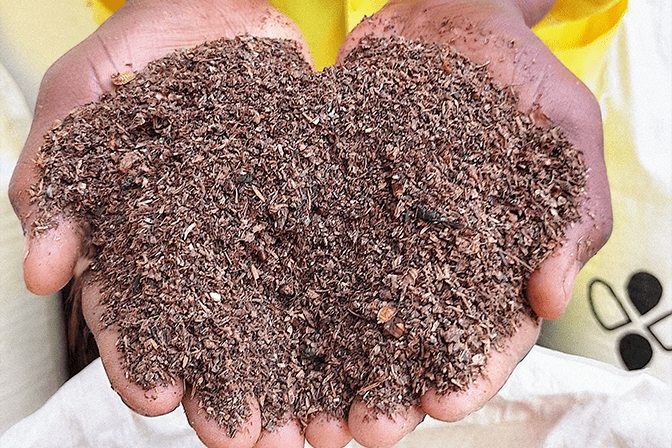
BSF Organic Fertiliser Nutrient Composition
At Moterra Farms, we produce Black Soldier Fly organic fertiliser right here in Matop0, Bulawayo. We believe every farmer in Zimbabwe deserves access to a fertiliser that works harder than synthetic alternatives at a fraction of the cost. Understanding what is in BSF organic fertiliser helps you make better decisions for your soil and crops. This guide breaks down the full nutrient composition of BSF frass and explains why it outperforms conventional fertilisers across every meaningful agronomic measure.
What Makes BSF Organic Fertiliser Different From Conventional Fertilisers?
Most synthetic fertilisers deliver nitrogen, phosphorus, and potassium — and nothing more. BSF organic fertiliser from Moterra Farms delivers all three macronutrients plus secondary nutrients, micronutrients, organic matter, and chitin – a biological compound that no synthetic fertiliser can replicate. Synthetic fertiliser prices in Zimbabwe have risen sharply recently. A 50kg bag of compound fertiliser now costs significantly more than it did five years ago. BSF organic fertiliser produced locally at Moterra Farms offers Zimbabwean farmers a powerful, affordable, and sustainable alternative that improves soil health season after season rather than degrading it.
Nitrogen, Phosphorus, and Potassium in BSF Organic Fertiliser
Nitrogen is the most important nutrient for vegetative plant growth. BSF organic fertiliser contains between 2.5% and 4.5% nitrogen on a dry weight basis. This nitrogen is predominantly in organic form, releasing slowly through natural mineralisation. Slow-release nitrogen matches the growth cycle of crops far better than synthetic ammonium nitrate, which releases all at once and risks burning crops at high application rates. Zimbabwean tobacco and horticultural farmers benefit enormously from this steady, sustained nitrogen release throughout the growing season.
Phosphorus in BSF organic fertiliser ranges between 1.5% and 3.0% dry weight. Research has demonstrated that BSF frass application increases plant-available phosphorus in the soil by up to 150 times compared to unamended soil. This is a transformational benefit for farmers across Matabeleland, where soils are commonly phosphorus-deficient and expensive phosphate fertilisers are required to compensate. Potassium levels range between 1.5% and 2.5% dry weight, supporting fruit development, disease resistance, and efficient water use in crops throughout the growing season.
Secondary Macronutrients — Calcium, Magnesium, and Sulphur
BSF organic fertiliser is exceptionally rich in calcium, containing between 3.0% and 8.0% on a dry weight basis. This calcium comes directly from the exoskeletons and pupal casings of the Black Soldier Fly larvae during the production process. High calcium content improves soil structure, reduces soil acidity, and supports strong cell wall development in crops. For farmers across Zimbabwe working on acidic sandy soils, the calcium content of BSF frass provides meaningful pH correction benefits that reduce the need for separate lime applications.
Magnesium is present at between 0.3% and 0.8% dry weight. Magnesium is the central atom in every chlorophyll molecule and is essential for photosynthesis and enzyme activation in plants. Sulphur ranges between 0.3% and 0.6% dry weight, supporting protein synthesis, enzyme function, and the development of essential amino acids in crops. Both nutrients are commonly deficient in intensively farmed Zimbabwean soils and are not present in standard NPK synthetic fertiliser formulations.
Micronutrients and Trace Elements in BSF Frass
BSF organic fertiliser contains a broad spectrum of micronutrients that synthetic NPK fertilisers do not provide. Iron is present at between 800 and 2,500 mg per kilogram, supporting enzyme systems and chlorophyll synthesis. Zinc ranges between 100 and 350 mg per kilogram, playing a critical role in growth hormone production and disease resistance. Manganese is present at between 150 and 400 mg per kilogram, supporting photosynthesis and nitrogen metabolism. Copper ranges between 20 and 80 mg per kilogram, supporting enzyme activity and lignin synthesis in plant cell walls. Boron is present at between 10 and 30 mg per kilogram, supporting cell division, pollen development, and sugar transport within the plant.
These micronutrients work together to support overall plant health in ways that a simple NPK fertiliser simply cannot replicate. Micronutrient deficiencies are among the most common causes of yield loss on Zimbabwean farms, and BSF organic fertiliser addresses multiple deficiencies simultaneously with a single application.
Chitin — The Unique Biological Advantage of BSF Organic Fertiliser
Chitin is what truly sets BSF organic fertiliser apart from every other fertiliser on the Zimbabwean market. It is a structural polysaccharide derived from the exoskeletons of Black Soldier Fly larvae. This nutrient is present in BSF frass at between 40 and 80 milligrams per gram of dry frass depending on production conditions. No synthetic fertiliser contains chitin. No conventional compost or animal manure comes close to the chitin levels found in BSF frass.
Chitin delivers three powerful agronomic benefits simultaneously. The nutrient stimulates natural plant immunity responses, activating the production of chitinase enzymes that suppress fungal pathogens and soil nematodes in the root zone. It promotes the proliferation of beneficial soil microorganisms, particularly chitinolytic bacteria that enhance nutrient cycling and long-term soil health. Chitin suppresses harmful soil-borne pathogens including Fusarium, Pythium, and root-knot nematodes — organisms responsible for significant crop losses on tobacco and horticultural farms across Zimbabwe every season. For farmers who have battled nematode pressure or root disease under continuous cropping, the chitin content of Moterra Farms BSF organic fertiliser provides biological protection as a standard part of every application.
Organic Matter Content and Soil Health Benefits
BSF organic fertiliser has an organic matter content of between 40% and 70% dry weight depending on the substrate used during larval production. This high organic matter content is one of the most important long-term benefits of regular BSF frass application. Organic matter improves soil water retention, allowing soils to hold moisture for longer between rainfall events — a critical benefit during the erratic rainfall patterns now common across Matabeleland. It improves soil structure by binding soil particles into aggregates that resist compaction and erosion. It increases cation exchange capacity — the soil’s ability to hold and release nutrients to plant roots — meaning that other fertilisers you apply are used more efficiently and less is lost to leaching.
The carbon to nitrogen ratio of BSF frass typically falls between 5:1 and 12:1. This is within the optimal range for rapid nutrient mineralisation and immediate availability to crops, making BSF frass a fast-acting as well as long-term soil amendment.
pH and Salt Content — Safe for All Zimbabwean Soils
BSF organic fertiliser has a pH of between 6.5 and 7.5 depending on the substrate composition used during production. This near-neutral pH makes it safe for direct application to all soil types without risk of acidification. Many animal manures acidify soil with repeated application over time, compounding the acidity problems already common across Zimbabwe’s farming regions. BSF frass does not carry this risk. Electrical conductivity — a measure of salt content — is typically low at between 1.5 and 3.5 millisiemens per centimetre. This low salt content means BSF frass carries minimal risk of salt damage to crops even at higher application rates, making it safe to use generously across all crop types and soil conditions.
How BSF Organic Fertiliser Compares to Conventional Options
BSF organic fertiliser from Moterra Farms delivers higher nitrogen availability than standard compost, higher phosphorus availability than animal manure, the calcium benefit of bone meal, the micronutrient profile of vermicompost, and the unique biological pest suppression of chitin — all in a single locally produced product. Synthetic fertiliser delivers NPK and nothing else. It degrades soil biology with repeated use, acidifies soils over time, and costs more every season as import prices rise. BSF organic fertiliser builds soil health cumulatively, improves with every application, and is produced right here in Matopo, Bulawayo — keeping your money in the local economy and reducing your dependence on expensive imported inputs.
Full Nutrient Profile of Moterra Farms BSF Organic Fertiliser
| Nutrient | Typical Range |
|---|---|
| Nitrogen (N) | 2.5 – 4.5% dry weight |
| Phosphorus (P) | 1.5 – 3.0% dry weight |
| Potassium (K) | 1.5 – 2.5% dry weight |
| Calcium (Ca) | 3.0 – 8.0% dry weight |
| Magnesium (Mg) | 0.3 – 0.8% dry weight |
| Sulphur (S) | 0.3 – 0.6% dry weight |
| Organic Matter | 40 – 70% dry weight |
| Chitin | 40 – 80 mg/g |
| pH | 6.5 – 7.5 |
| C:N Ratio | 5:1 – 12:1 |
Order BSF Organic Fertiliser From Moterra Farms in Bulawayo Today
Moterra Farms is based in Matopo, Bulawayo and supplies BSF organic fertiliser to farmers across Matabeleland and Zimbabwe. Whether you are growing tobacco, vegetables, maize, or fruit crops, our BSF frass fertiliser delivers measurable improvements in soil health, crop yield, and input cost efficiency from the very first season of use. Contact Moterra Farms today to place your order, request a delivery quote, or find out more about how BSF organic fertiliser can transform your farm’s productivity and profitability.
Related posts: